Tahona vs. roller mill: why the slow way tastes different
After the agave is cooked, somebody has to crush it. A two-tonne volcanic wheel and a steel roller mill get to the same sugar two completely different ways — and you can taste which one was used.
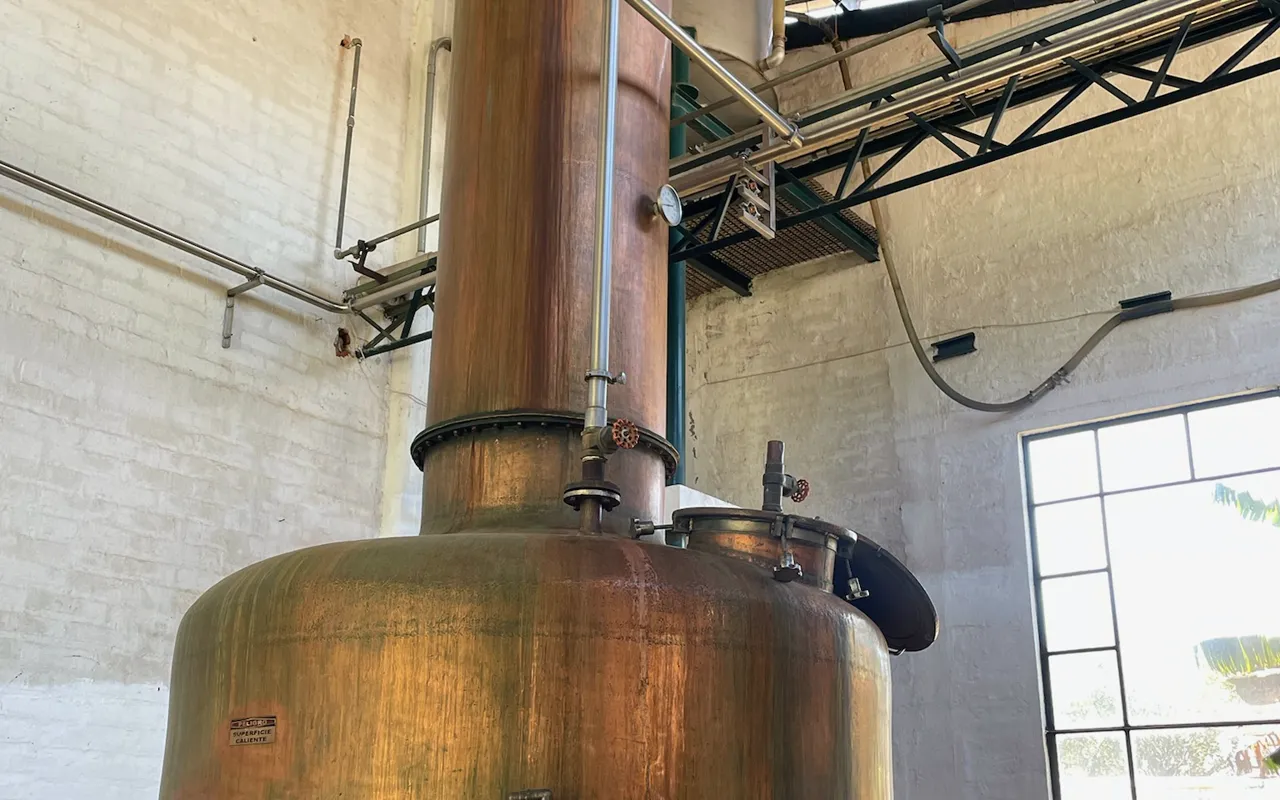
The tahona is a heavy volcanic-stone wheel that slowly crushes cooked agave to free its sugars; the roller mill is a machine that shreds and rinses the agave in minutes. They both get you to fermentable juice, but the slow stone way leaves more of the agave fiber in contact with the liquid, and that shows up in the glass as a rounder, earthier, more textured spirit.
Here is the step nobody talks about. Once the agave hearts come out of the oven sweet and soft, the sugar is still locked inside dense, fibrous pulp. Extracting it is its own craft, and the tool you choose quietly sets the personality of the finished tequila.
The roller mill: fast, clean, efficient
A roller mill is the modern default. The cooked agave is fed through a shredder and a series of rollers while water rinses the sugar out of the fiber. It is fast, it captures a high percentage of the available sugar, and it is consistent batch to batch. The resulting juice is clean and bright, and there is nothing wrong with that — plenty of excellent tequila is made this way. What you trade is a little of the agave’s rougher, more savory character, because the fiber and the liquid spend very little time together.
The tahona: slow, heavy, old
The tahona is the old way, and it is genuinely hard work. A wheel of volcanic stone, often around two tonnes, rolls in a circular pit over the cooked agave, pressing rather than tearing it. The crushed fiber is frequently fermented right along with the juice. That extended contact pulls more of the deep, mineral, vegetal side of the agave into the spirit. Tahona-made tequila tends to read as earthier, more textured, sometimes a touch briny or peppery — a fuller picture of the plant rather than just its sugar.
It is also slow and low-yield, which is the whole reason it is rare. You are choosing flavor over volume, and you pay for it in time. A roller mill can process a day’s agave in the time it takes a tahona to handle a fraction of it, and the stone needs people walking alongside it the whole way. Nobody runs a tahona to save money. They run it because the spirit it makes can not be made any other way.
Some distilleries split the difference
You will also see tequilas that blend the two — part of the batch crushed by tahona, part by roller mill, then married before or after distillation. Done thoughtfully, this captures some of the stone’s earthy depth while keeping the brighter, cleaner notes the mill is good at. It is a legitimate middle path, and a reminder that there is no single “correct” way to extract agave. The right answer is whatever serves the spirit the distillery is trying to make.
Which is “better”?
Neither, honestly. They are different lenses on the same agave. A clean, citrus-forward blanco off a roller mill can be a beautiful thing in a paloma. A tahona spirit asks you to slow down and sip. The mistake is assuming “tahona” automatically means better — a carelessly made stone-crushed tequila is still carelessly made. The stone is a tool, not a guarantee.
At Siempre, the agave is cooked in brick ovens at NOM 1414 with the Vivanco family and Sergio Cruz, and our Supremo Tahona is the expression built around that slow stone-crushed character. Taste it next to a roller-milled blanco and the difference stops being theory.
The slow way costs more and yields less. That is exactly why it tastes like more.